History
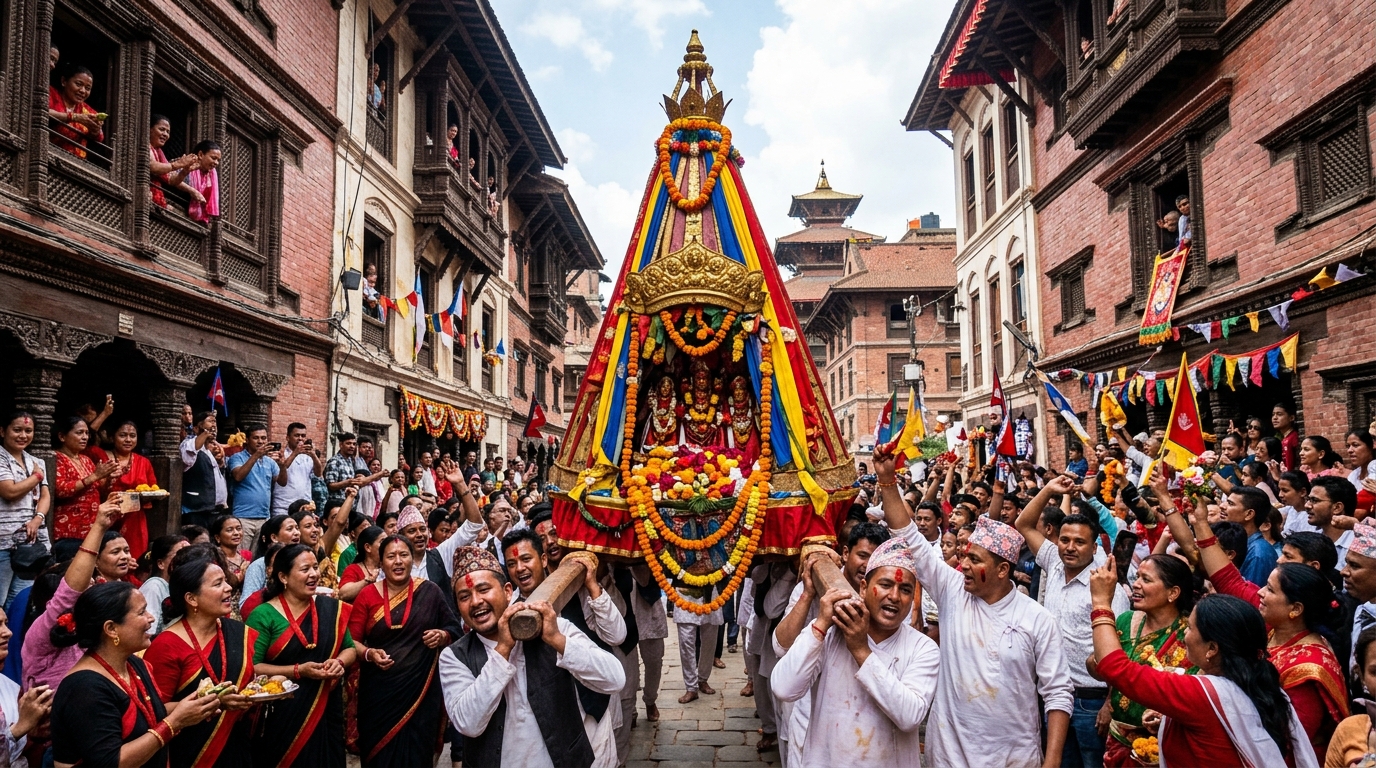
Hadigaun Jatra — locally known as "Kahi Nabhako Jatra" (the Jatra found nowhere else) — is celebrated in Hadigaun, a historic Newar settlement in the northern part of Kathmandu city. The festival is dedicated to the Hindu trinity of Brahma, Vishnu, and Maheswora (Shiva), each of whom is represented by a chariot — but with a striking twist: the chariots are constructed upside-down, with their bases pointing skyward.
This architectural inversion is not found in any other festival in Nepal or, as far as scholars know, anywhere else in the Hindu world. The reason for the inverted design is embedded in local oral tradition: a deity instructed the community to build the chariots this way, and the tradition has been faithfully maintained for centuries.
Significance
Hadigaun itself is a settlement of great antiquity — inscriptions from the Licchavi period mention it as an important settlement, and its temples contain sculptures dating back over a millennium. The Jatra, though little-known outside the community, is a living example of how local Newar communities developed their own distinct ritual traditions separate from mainstream Hindu or Buddhist practice.
What to Expect
Hadigaun Jatra is held in October (Kartik month of the Nepali calendar). Hadigaun is in the Chabahil area of Kathmandu, northeast of the city centre. The upside-down chariots are assembled in the neighbourhood streets and pulled by community members. Because the festival is little-known to outsiders, it offers a rare opportunity to witness an authentic local festival without large tourist crowds. Respectful observation is welcomed; participate in conversation with locals to learn the oral history.