History
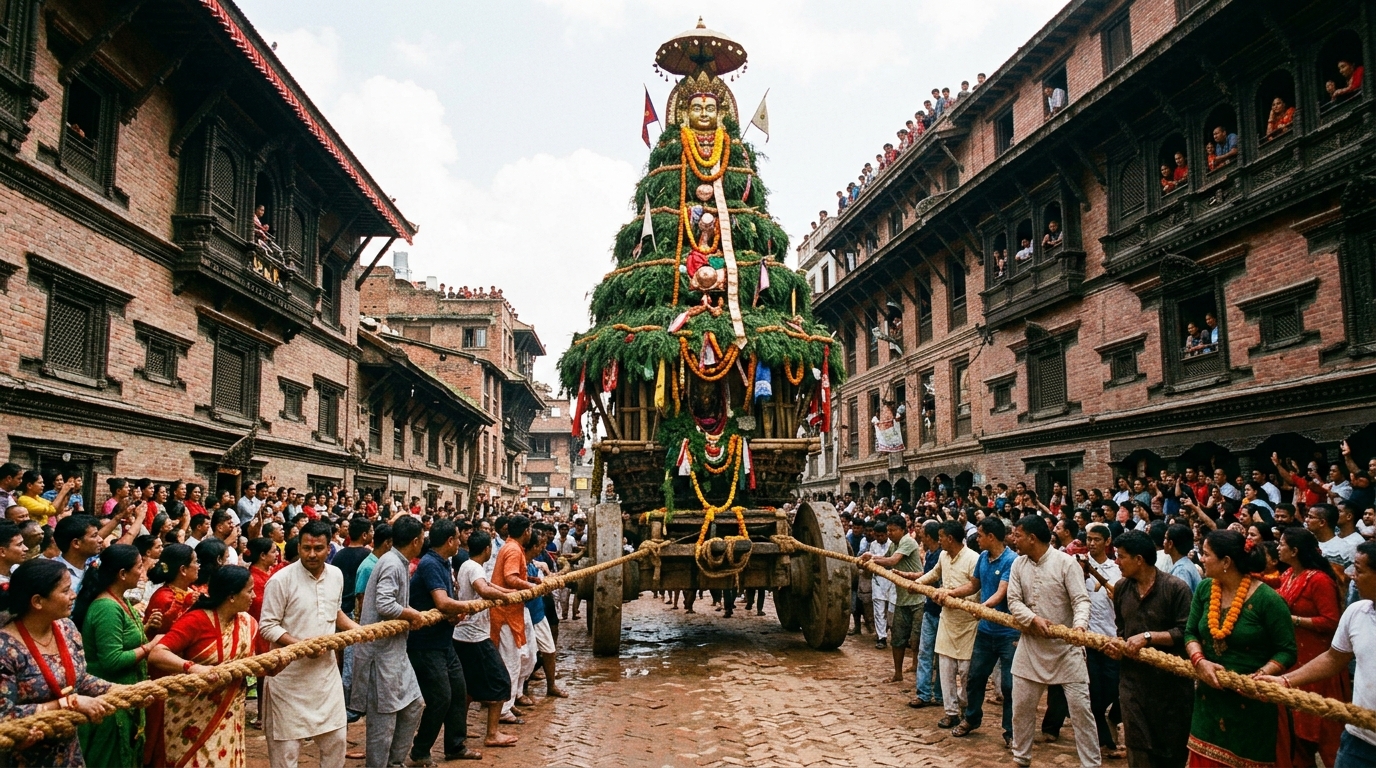
Rato Machindranath Jatra (also called Bunga Dyah Jatra in Newari) is the grandest and longest chariot festival in Nepal, spanning four to six weeks as the enormous chariot of the Red Machindranath is pulled through every neighbourhood of Patan (Lalitpur).
Machindranath (known as Bunga Dyah — "God of the Valley" in Newari) is revered as the god of rain and compassion, worshipped equally by Hindus and Buddhists as a divine protector of the Kathmandu Valley's harvests. The festival is believed to date back to the 7th century, when the valley suffered a terrible drought; a ritual brought Machindranath from Assam in India to Nepal, after which the rains returned.
Significance
The chariot — a towering structure of timber, bamboo, and cloth that can reach 15 metres in height — is rebuilt each year by skilled craftsmen following ancient guild traditions. Different guthi organisations of Patan are responsible for specific elements of the construction, the pulling rituals, and the musical accompaniments.
The festival concludes with Bhoto Jatra (see separate page), where the sacred jewelled vest of the deity is displayed to the public in the presence of Nepal's head of state — the only festival in the country accorded this honour.
What to Expect
The chariot moves slowly, a few hundred metres per day, so you can follow it through Patan over multiple visits. The narrow streets of Patan's old town — lined with ancient Newari architecture and carved wood windows — make for a spectacular backdrop. The chariot pulling days draw the largest crowds; the atmosphere is part religious procession, part community street party. Patan Durbar Square (UNESCO World Heritage Site) is the best base.