History
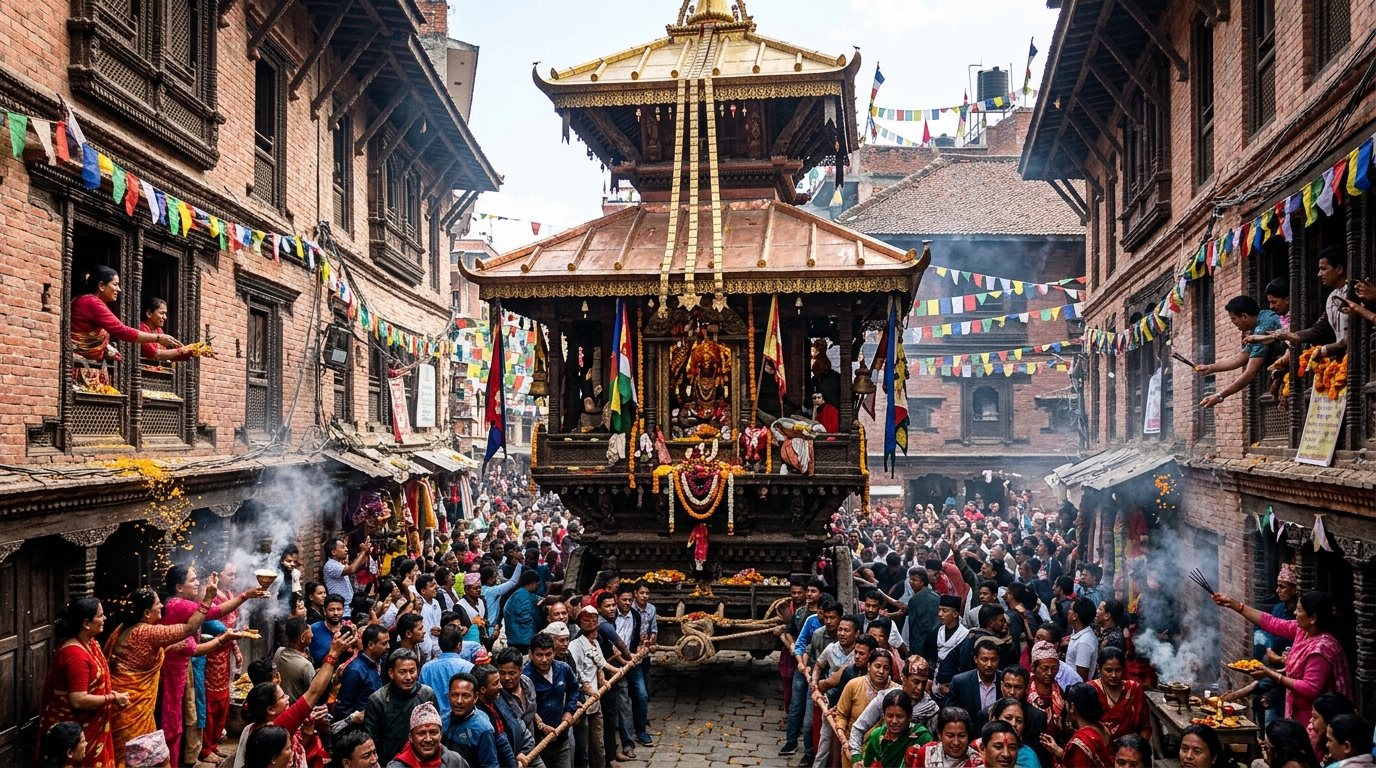
Seto Machindranath (the White Machindranath) is worshipped as the god of rain and harvest by both Hindus and Buddhists of the Kathmandu Valley — an example of the unique religious syncretism that defines Newar culture. The deity resides at Machhindra Bahal in Kel Tole, Kathmandu, and once a year is mounted on an enormous wooden chariot and pulled through the city's old lanes in a three-day procession.
The festival is believed to date back to at least the 10th century. Historical records from the Malla kingdom document the elaborate preparations and the obligation of different guthi (community organisations) to contribute labour, materials, and ritual services.
Significance
The chariot procession is a community affair — dozens of guilds and neighbourhoods each have designated roles in constructing the chariot, pulling it, and performing associated rituals. The chariot itself, constructed fresh each year from timber and bamboo, can reach several storeys in height and requires hundreds of people pulling thick ropes to navigate the narrow medieval streets.
For devotees, catching a glimpse of the deity on the chariot or touching the ropes is considered highly auspicious and believed to bring blessings for health and a good harvest.
What to Expect
The chariot departs from Jamal and moves through Ason, one of Kathmandu's most atmospheric old bazaars. The procession moves slowly — the narrow streets require careful navigation — so you can position yourself at any point along the route. Local sweet shops in Ason sell traditional Newari sweets during the festival period. Dress modestly and be prepared for dense crowds.